 Making Puerto Rican pasteles is as much about tradition as it is about food.
And if you've ever helped make a large batch, you probably remember one job in particular:
Grating the viandas.
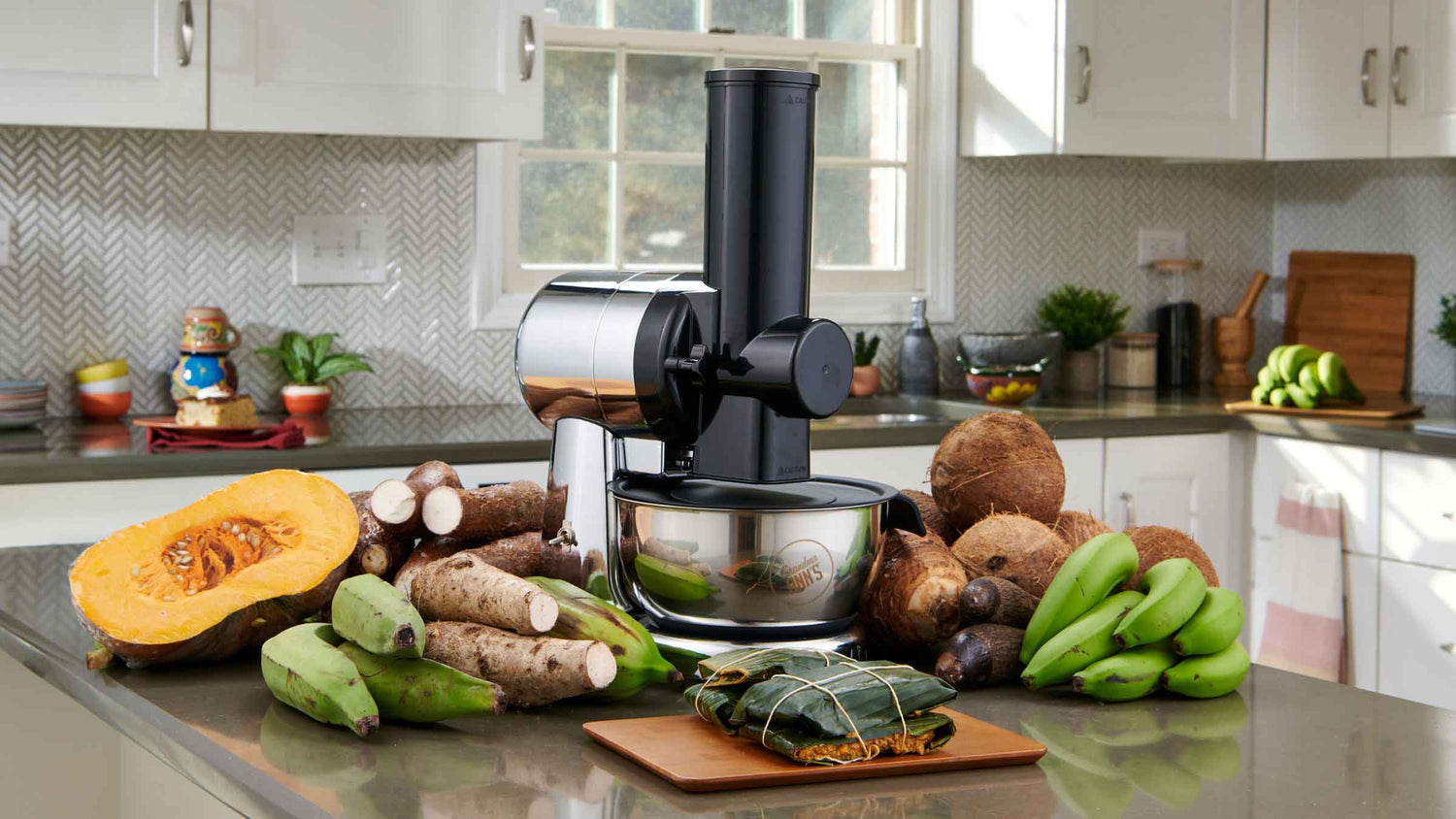
Green bananas, yautía, yuca, calabaza and plantains can all find their way into pasteles masa depending on the family recipe.
The exact combination varies.
The question many pasteles makers now face is different:
What's the best way to turn all those raw ingredients into masa?
Hand grater?
Blender?
Food processor?
Guayadora?
Electric grater?
There isn't one answer for every family, because the method you choose affects both the amount of work involved and the finished texture.
Here's what to consider.
First: There Is No One “Correct” Pasteles Masa Recipe
This is important.
Puerto Rican families have been handing down their own pasteles recipes for generations.
One recipe may rely heavily on green bananas and yautía.
Another includes yuca.
Another uses calabaza or plantain.
Pasteles de yuca can use an entirely different base.
So we're not going to tell you which recipe is “authentic.”
The authentic recipe is the one your family keeps making.
What we can talk about is how different methods prepare those ingredients.
Method 1: Hand Grating
Hand grating is about as traditional as it gets.
It gives the cook tremendous control over texture and doesn't require electricity or expensive equipment.
It also requires work.
A lot of it.
When you're preparing enough viandas for dozens of pasteles, repeatedly grating dense green bananas, yautía and yuca can become one of the most physically demanding parts of the entire process.
Advantages
Traditional grated texture.
Simple equipment.
Maximum control.
Disadvantages
Slow for large batches.
Physically demanding.
Hard on hands, wrists and arms.
For someone making a small batch occasionally, hand grating may be perfectly reasonable.
For someone making dozens—or hundreds—of pasteles, it's easy to understand why máquinas para pasteles became popular.
Method 2: Blender
A blender is fast and almost everybody already owns one.
But a blender doesn't grate.
Its blades cut and process ingredients, often with liquid helping everything circulate.
That can produce a much smoother, more puréed consistency than traditional hand grating.
Some families prefer a very smooth masa and happily use a blender.
Others immediately notice the difference.
Advantages
Fast.
Common kitchen appliance.
Easy to use.
Disadvantages
Can produce a much smoother/puréed texture.
May require working in small batches.
May require additional liquid depending on the method.
If your family's preferred masa has a noticeable freshly grated texture, a blender may not reproduce it.
Method 3: Food Processor
A food processor falls somewhere in between depending on the blade or grating attachment being used.
A standard chopping blade processes food differently from an actual grating blade.
A grating attachment can get considerably closer to hand-grated food.
The challenge with large pasteles batches is capacity.
You'll typically be loading, processing and emptying the bowl repeatedly.
Advantages
Versatile.
Many families already own one.
Grating attachments can produce good results.
Disadvantages
Small bowl compared with continuous-feed machines.
Repeated loading and emptying during large batches.
Texture depends heavily on the attachment being used.
Method 4: Traditional Guayadora or Máquina para Pasteles
In Puerto Rican kitchens, you may hear machines for preparing pasteles referred to as a guayadora, máquina de pasteles or máquina para hacer pasteles.
These machines solve the fundamental problem:
Grating a lot of viandas takes a lot of work.
Different máquinas use different designs, so operation, capacity, cleaning and finished texture can vary significantly.
If you're considering one, pay attention to:
How the food is actually grated.
How large the feed opening is.
How much preparation the food requires.
How difficult the machine is to clean.
Whether replacement parts/support are available.
And most importantly:
Look at the finished masa—not just the machine.
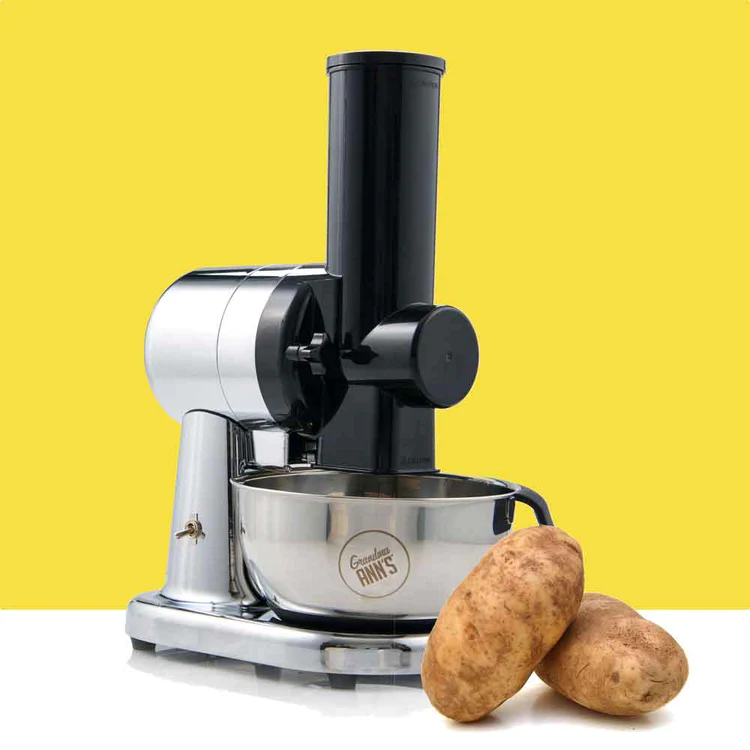
Method 5: Grandma Ann's Electric Grater
Grandma Ann's approaches the problem as an electric grater.
Food is pressed against a rotating stainless-steel grating drum, allowing cooks to process dense raw ingredients quickly while maintaining an actual grated texture.
That makes it particularly useful for people who want to reduce the work of hand grating without simply turning their viandas into a blender-style purée.
Grandma Ann's can grate ingredients commonly used in Puerto Rican masa, including:
Green bananas
Yautía
Yuca / cassava
Calabaza
Plantains
The machine also allows continuous feeding, which makes it especially useful when preparing large batches.
SEE GRANDMA ANN'S GRATE REAL PASTELES INGREDIENTS →
What Texture Should Pasteles Masa Have?
This is where family tradition wins.
Some people prefer extremely smooth masa.
Others expect to feel the character of freshly grated viandas.
Neither Grandma Ann's nor an internet recipe should tell your family which one is correct.
If you love the texture produced by traditional grating, choose a preparation method that actually grates the ingredients.
If your family prefers very smooth masa, another processing method may be perfectly appropriate.
Know the texture you're trying to reproduce before choosing the machine.
How to Grate Viandas Efficiently
If you're using Grandma Ann's or another continuous electric grater, technique makes a significant difference.
With Grandma Ann's:
Use larger peeled pieces whenever possible.
Maintain steady pressure.
Add the next piece before the previous piece completely finishes.
We call this Stack & Push.
Continuous feeding keeps food against the grating surface and helps minimize small leftover pieces.
What If I'm Making Dozens of Pasteles?
That's when equipment becomes much more valuable.
If you're making four pasteles, saving time on grating isn't particularly important.
If you're making 50, 100 or 400?
Completely different story.
Think beyond the advertised speed of a machine.
Consider the entire workflow:
Peeling.
Cutting.
Grating.
Emptying containers.
Cleaning.
Then assembling and wrapping.
A machine that requires less cutting, permits continuous feeding and is easy to clean can save time in several parts of that process.
What Is the Best Machine for Making Pasteles?
There isn't one answer for every cook.
Ask yourself:
Do I care about maintaining grated texture?
How many pasteles do I normally make?
How much prep does the machine require?
Can it handle dense raw viandas?
How difficult is cleanup?
Can I see the machine making actual pasteles masa before buying it?
That last question matters.
Don't judge a máquina para pasteles from a polished product photo.
Watch it grate the ingredients you actually use.
The Bottom Line
The best method is the one that lets your family continue making the pasteles you love.
For some families, that's still a hand grater.
For others, it's a blender or food processor.
And for cooks who want to dramatically reduce the work while maintaining a grated texture, an electric grater can make pasteles day much easier.
The technology can change.
The recipe doesn't have to.
Want to see an electric grater make real Puerto Rican pasteles masa?
VISIT OUR COMPLETE PASTELES GUIDE
Watch Grandma Ann's grate green bananas, yautía, yuca, calabaza and plantains and decide for yourself whether the finished texture is right for your family's masa.